
Whiskey vs. Brandy: What’s the Real Difference?
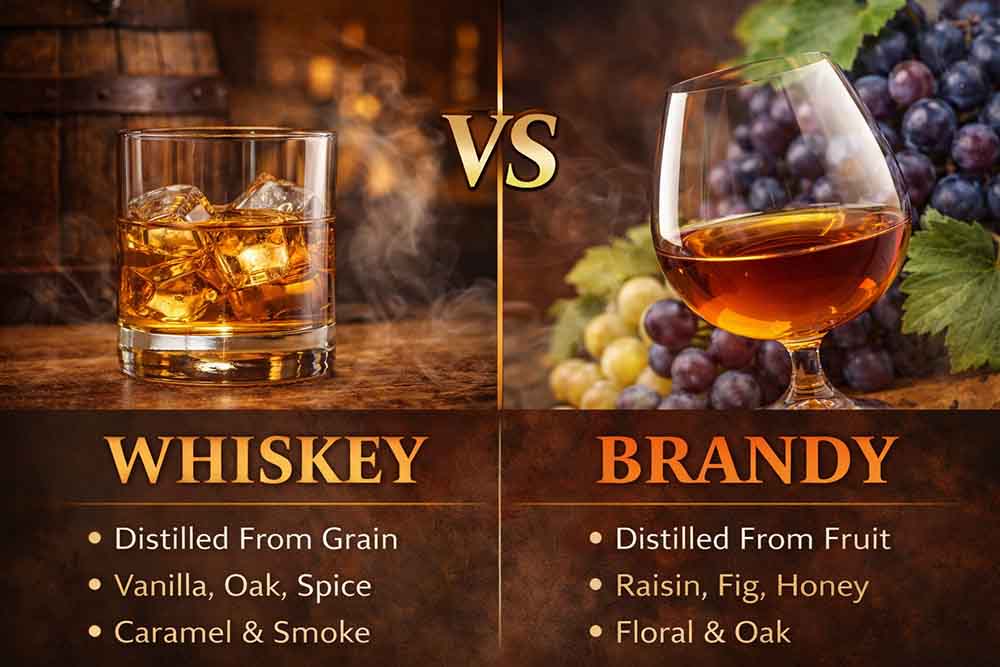
Whiskey and brandy are both aged spirits enjoyed neat, on the rocks, or in classic cocktails—but they are fundamentally different in how they’re made, what they’re made from, and how they taste. Understanding these differences can help you choose the right spirit for your palate, your bar, and your next pour.
The Core Difference: Grain vs. Fruit
The most important distinction between whiskey and brandy is their base ingredient.
Whiskey is distilled from fermented grain mash. Depending on the style, that grain can include corn, barley, rye, or wheat. Bourbon, for example, must contain at least 51% corn. Rye whiskey contains at least 51% rye. Scotch is typically made from malted barley.
Brandy, on the other hand, is distilled from fermented fruit juice—most commonly grapes. In fact, brandy is essentially distilled wine. Some brandies are made from apples (like Calvados) or other fruits, but grape-based brandy is the most common style worldwide.
In short:
-
Whiskey = distilled grain
-
Brandy = distilled fruit
The Production Process
Both spirits begin with fermentation, but the source material changes everything.
Whiskey Production
-
Grains are mashed and fermented into a beer-like liquid.
-
The liquid is distilled to concentrate alcohol.
-
It is aged in wooden barrels—often charred oak.
-
Over time, the spirit develops color, flavor, and smoothness from the wood.
Many American whiskeys, like bourbon and Tennessee whiskey, use new charred oak barrels, which give bold flavors of vanilla, caramel, and toasted oak.
Brandy Production
-
Fruit juice (usually grape wine) is fermented.
-
The wine is distilled.
-
It is aged in oak barrels (often previously used barrels).
-
The spirit develops rich fruit and oak complexity.
Brandy barrels are usually not heavily charred like bourbon barrels, resulting in a smoother, fruit-forward profile.
Flavor Profile Differences
Because whiskey is grain-based and often aged in charred oak, it typically offers flavors like:
-
Caramel
-
Vanilla
-
Toffee
-
Oak
-
Spice
-
Smoke (especially in Scotch)
-
Toasted grain
Brandy, being fruit-based, tends to deliver:
-
Dried fruit
-
Raisin
-
Fig
-
Honey
-
Floral notes
-
Subtle oak
-
Warm spice
Whiskey often has a bolder, more structured mouthfeel, while brandy is typically softer, rounder, and more fruit-forward.
Aging & Color
Both spirits get their amber color primarily from barrel aging. The longer they age in oak, the darker and more complex they become.
Whiskey aging regulations vary by country. Bourbon must be aged in new charred oak barrels. Scotch must age at least three years. Some whiskeys age for decades.
Brandy aging classifications (like VS, VSOP, and XO in Cognac) indicate minimum barrel aging periods, often ranging from two years to much longer.
Cultural Origins
Whiskey has strong roots in Ireland, Scotland, the United States, Canada, and Japan. It evolved from grain distillation traditions dating back centuries.
Brandy originated in Europe, particularly France and Spain, where distilling wine became a way to preserve and transport it more efficiently.
How They’re Enjoyed
Whiskey is commonly served neat, on the rocks, or in cocktails like the Old Fashioned and Manhattan.
Brandy is often sipped neat in a snifter, slightly warmed by hand, or used in cocktails like the Sidecar or Brandy Alexander.
Final Thoughts
Whiskey and brandy may look similar in the glass, but their differences start at the source: grain versus fruit. Whiskey tends to be bold, spicy, and oak-driven. Brandy is smooth, rich, and fruit-forward.
Both offer complex, rewarding drinking experiences—just built on entirely different foundations.

Whiskey Blog
- What Is Whiskey? A Complete Guide to the World’s Most Iconic Spirit
- Top 10 DIY Kits for Crafting Whiskey at Home
- Is Rum a Whiskey? Key Differences Between Rum and Whiskey Explained
- What Makes Tennessee Whiskey Unique? The Charcoal-Mellowed Difference
- Lincoln County Process Explained: History, Innovation, and the Enslaved Distillers Who Shaped Tennessee Whiskey