What Is Whiskey? A Complete Guide to the World’s Most Iconic Spirit

03/16/2026
by TOB Admin
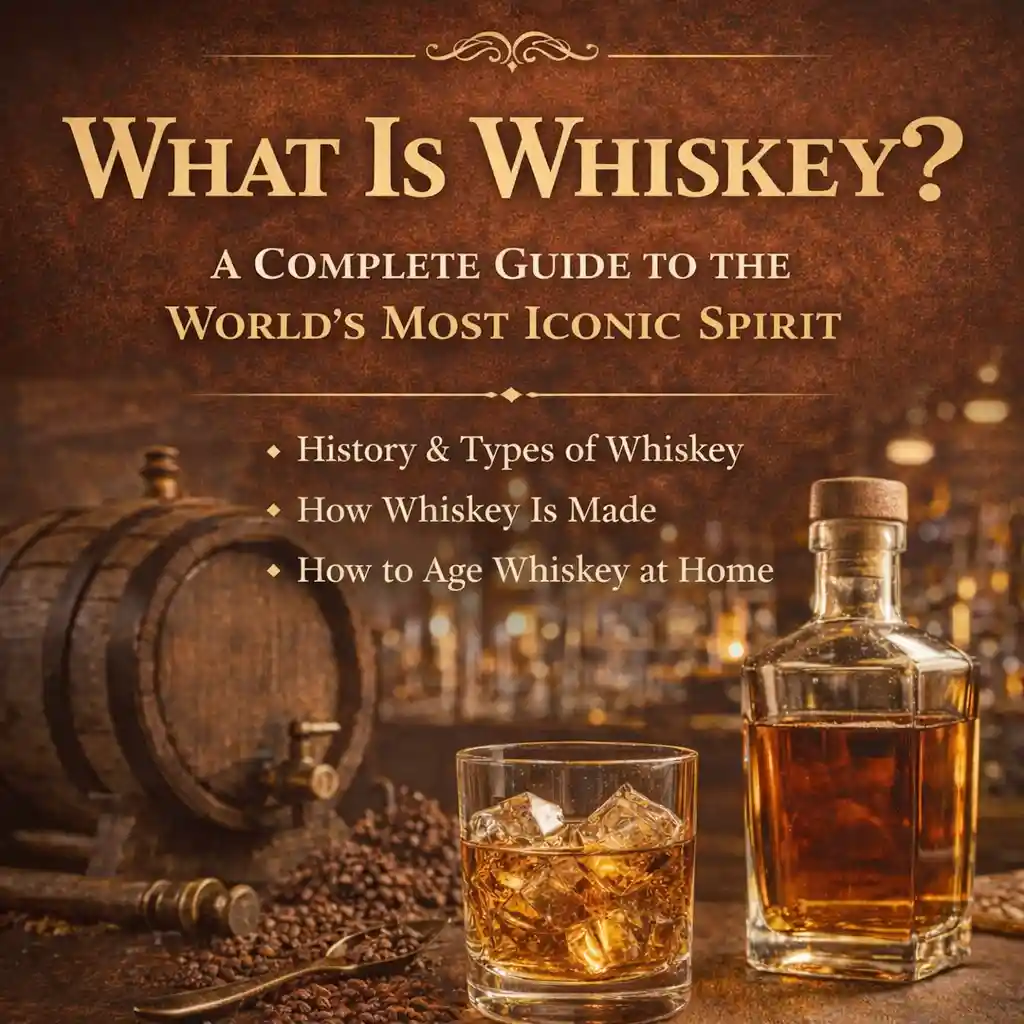
What is whiskey guide featuring a glass of whiskey, oak aging barrel, and whiskey bottle in a warm bar setting illustrating how whiskey is made and aged.


What Is Whiskey? A Complete Guide to the World’s Most Iconic Spirit


Whiskey Guide • Aging • Home Crafting

What Is Whiskey? A Complete Guide to the World’s Most Iconic Spirit

Whiskey is more than a drink—it is a story of grain, fire, oak, time, and craftsmanship. From bourbon and rye to Scotch and Irish whiskey, this timeless spirit continues to captivate drinkers around the world. In this guide, you’ll learn what whiskey is, how whiskey is made, the different types of whiskey, and how to start aging whiskey at home.

Whiskey is one of the most celebrated spirits in the world. Rich in heritage, flavor, and complexity, whiskey is produced from fermented grain mash, distilled to concentrate the alcohol, and then aged in wooden barrels—most often oak. The result is a spirit with remarkable depth, aroma, and character.

In simple terms: whiskey is a distilled spirit made from grains such as barley, corn, rye, or wheat, then matured in oak to develop its color and flavor.

What Is Whiskey?

Whiskey is a distilled alcoholic beverage made from fermented grains and aged in wood barrels. Depending on where it is made and how it is produced, whiskey can range from smooth and sweet to smoky, spicy, bold, or deeply oaked.

Common grains used to make whiskey include:

  • Barley
  • Corn
  • Rye
  • Wheat

Fresh off the still, whiskey is typically clear. Its amber, copper, or mahogany color develops during barrel aging, as the spirit extracts compounds from the oak. This aging process also creates the signature flavors people love—vanilla, caramel, spice, toast, smoke, and dried fruit notes.

The barrel is where whiskey becomes whiskey. Without time in oak, distilled spirit lacks the color, softness, and layered flavor that define the category.

The History of Whiskey

Whiskey traces its roots back centuries and is widely believed to have originated in Ireland and Scotland. The word itself comes from the Gaelic phrase uisce beatha, meaning “water of life.” Over time, distillation knowledge spread across Europe and eventually to North America, where styles such as bourbon and rye whiskey took on lives of their own.

Today, whiskey is made across the globe, but the most famous whiskey-producing regions include:

  • Scotland
  • Ireland
  • United States
  • Canada
  • Japan

Each country brings its own traditions, regulations, climate, grain preferences, and barrel practices. That is why whiskey remains one of the most diverse and exciting spirits in the world.

How Whiskey Is Made

While production methods vary by style and region, the whiskey-making process generally follows four major steps.

1

Malting & Mashing

Grains are crushed and combined with water. Enzymes convert starches into fermentable sugars, creating a sweet liquid mash ready for fermentation.

2

Fermentation

Yeast is added to the mash, converting sugars into alcohol. This creates a low-alcohol liquid often referred to as wash or distiller’s beer.

3

Distillation

The fermented liquid is heated in pot stills or column stills. Alcohol vapors rise, are condensed, and collected, producing a more concentrated spirit.

4

Aging in Oak

The new spirit is placed into oak barrels where time, temperature, and wood interaction transform it into finished whiskey.

Oak barrels are essential because they contribute flavor and texture. During aging, whiskey can take on notes of:

  • Vanilla
  • Caramel
  • Toast
  • Sweet spice
  • Char
  • Dried fruit

Why Barrels Matter So Much

Barrel aging is one of the biggest factors in whiskey flavor. As whiskey moves in and out of the wood due to temperature changes, it extracts compounds from the barrel that shape both aroma and taste. Barrel char, toast level, oak species, and barrel size all influence the final result.

Smaller barrels speed up maturation because more spirit touches more wood surface area. That is one reason home whiskey aging has become so popular among whiskey lovers and home bartenders.

Interested in aging whiskey at home?
Shop premium small oak barrels and spirit-aging products from 1000 Oaks Barrel.

Types of Whiskey

One of the reasons whiskey is so beloved is the variety of styles available. Here are some of the best-known categories.

Bourbon

Bourbon is an American whiskey made from a mash bill containing at least 51% corn. It must be aged in new charred oak barrels. Bourbon is known for a rich and approachable profile with notes of caramel, vanilla, toasted oak, and sweetness.

Rye Whiskey

Rye whiskey contains at least 51% rye grain and is often spicier, drier, and more peppery than bourbon. It is a favorite for classic cocktails like the Manhattan and Old Fashioned.

Scotch Whisky

Scotch is made in Scotland and often uses malted barley. Depending on the region and style, Scotch can be fruity, malty, maritime, smoky, or heavily peated.

Irish Whiskey

Irish whiskey is often triple-distilled and is widely known for its smooth, approachable, slightly sweet character with gentle fruit and grain notes.

Canadian Whisky

Canadian whisky is often lighter-bodied and highly versatile, with many examples featuring smooth texture and subtle spice.

Japanese Whisky

Japanese whisky takes inspiration from Scotch traditions but emphasizes precision, balance, elegance, and refined structure.

How to Taste Whiskey

Learning how to taste whiskey properly can deepen your appreciation and help you notice differences between styles.

  • Look: Observe the color and clarity.
  • Smell: Nose the whiskey gently to identify aromas like oak, fruit, spice, smoke, or vanilla.
  • Sip: Take a small sip and let it coat your tongue.
  • Finish: Notice what flavors linger after swallowing.

Adding a few drops of water can sometimes open up the whiskey and reveal more nuanced aromas.

Aging Whiskey at Home

Home whiskey aging has become increasingly popular because it lets enthusiasts experiment with flavor, oak intensity, and spirit customization. Using a smaller oak barrel, you can age whiskey, bourbon, rye, rum, tequila, cocktails, and more.

Benefits of aging whiskey at home include:

  • Faster barrel influence due to smaller barrel size
  • Greater flavor control
  • Fun, hands-on whiskey experimentation
  • A memorable gift idea for whiskey lovers
Start your own whiskey aging journey:
Browse DIY whiskey making kits for barrels, accessories, and home-aging tools.

Whiskey Gifts, Kits, and Amazon Shopping

If you are shopping for a whiskey lover, barrel aging kits and infusion products make standout gifts. They are practical, interactive, memorable, and perfect for birthdays, holidays, retirements, Father’s Day, housewarmings, and cocktail enthusiasts.

Thousand Oaks Barrel Co. offers a wide range of whiskey-related products, including mini barrels, aging kits, and spirit accessories. For shoppers who prefer marketplace convenience, you can also explore the brand on Amazon.

Final Thoughts

Whiskey is one of the world’s great spirits because it blends agriculture, chemistry, craftsmanship, tradition, and patience into a single glass. Whether you prefer bourbon, rye, Scotch, Irish whiskey, or an experimental small-batch home-aged pour, there is always something new to learn and enjoy.

For whiskey lovers who want to go beyond simply drinking and begin crafting their own experience, home barrel aging opens a rewarding new world. It turns whiskey appreciation into a hands-on hobby— and often into a passion.
Top 10 DIY Kits for Crafting Whiskey at Home

03/07/2026
by TOB Admin

Best Whiskey Making Kits: Top DIY Kits for Crafting Whiskey at Home

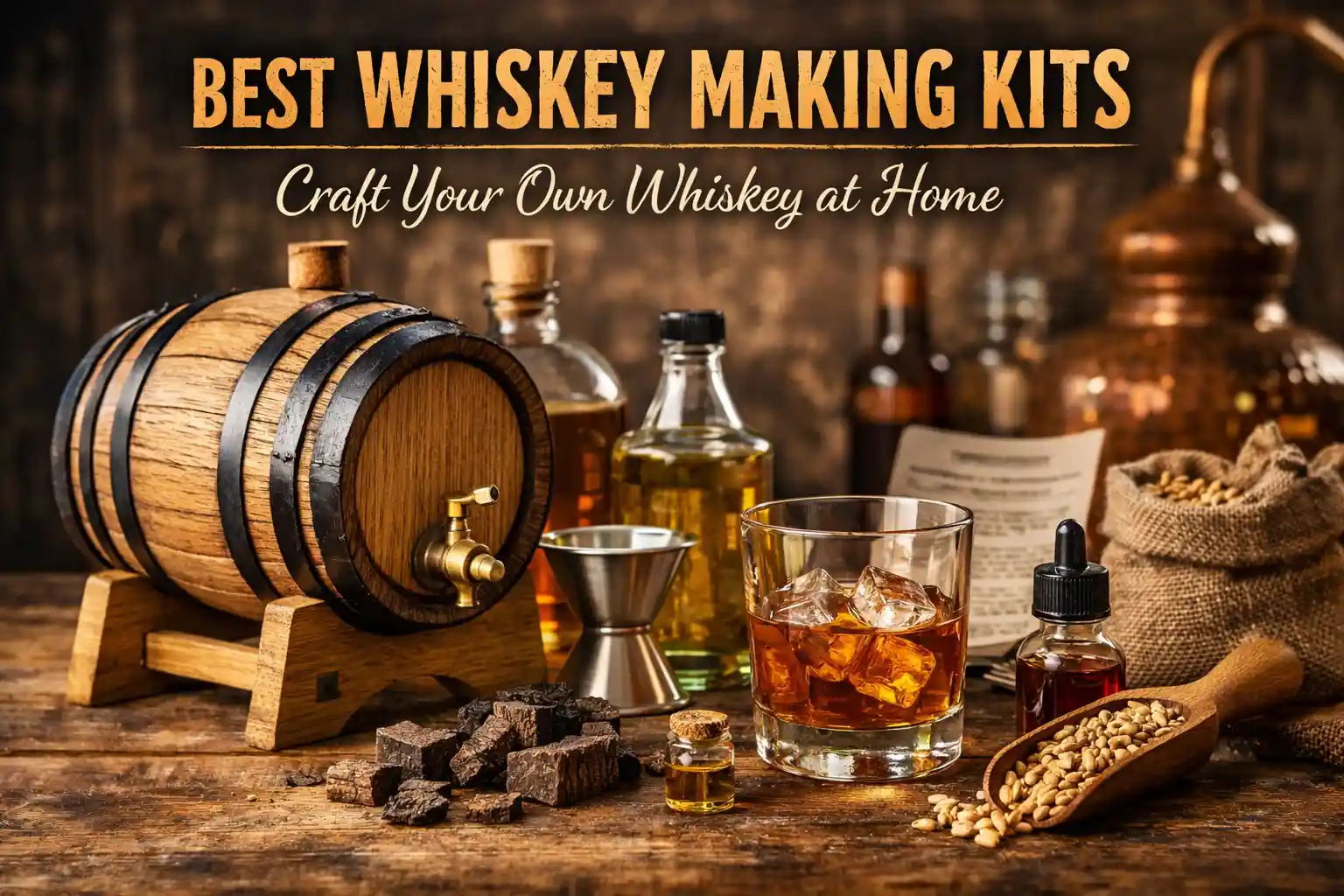
The popularity of craft spirits has inspired many enthusiasts to explore making their own whiskey at home. Thanks to modern whiskey making kits, you don’t need a distillery or years of aging to create rich, flavorful whiskey. With a small oak barrel, flavor essences, and simple instructions, you can transform neutral spirits into a smooth, barrel-aged whiskey in just a few weeks.

A DIY whiskey making kit allows beginners and experienced whiskey lovers alike to experiment with aging, blending, and flavor development. These kits typically include a charred oak barrel that accelerates the aging process, allowing you to achieve the complexity of traditional whiskey much faster.

If you’re looking for the best whiskey making kit to try at home or give as a unique gift, this guide covers ten of the top kits available from 1000 Oaks Barrel and WhiskeyMakingKits.com.


1. The Whiskey Experience™ Whiskey Making Kit

View The Whiskey Experience Kit

The Whiskey Experience™ Whiskey Making Kit is one of the most complete DIY whiskey kits available. Designed for enthusiasts who want to explore the world of whiskey, this kit allows you to craft several different whiskey styles using one aging barrel.

This premium kit includes a charred American white oak barrel, multiple whiskey flavor essences, and an educational guide explaining the fundamentals of whiskey production and aging.

Features

  • Authentic charred American white oak aging barrel
  • 10 international whiskey flavor essences
  • Whiskey education guide
  • Barrel stand, spigot, and accessories

With this kit, you can experiment with whiskey styles inspired by bourbon, Scotch, Irish whiskey, and other international spirits.


2. Small Batch Straight Bourbon Whiskey Making Kit

View Bourbon Whiskey Kit

If you love classic American bourbon, this Small Batch Straight Bourbon Whiskey Making Kit is an excellent way to start making whiskey at home.

The kit includes a real oak aging barrel and a premium bourbon essence that recreates the rich caramel, vanilla, and oak notes associated with Kentucky bourbon.

Features

  • Authentic oak barrel aging system
  • Premium bourbon flavor essence
  • Step-by-step instructions
  • Quick aging in small barrels

This is one of the most popular DIY bourbon making kits available today.


3. Canadian Rye Whiskey Making Kit

View Canadian Rye Kit

Canadian rye whiskey is known for its smooth body and subtle spice notes. The Canadian Rye Whiskey Making Kit recreates this classic whiskey profile using oak barrel aging and premium rye flavoring.

Features

  • American oak aging barrel
  • Rye whiskey flavor essence
  • Barrel stand and spigot
  • Detailed instructions

This kit is perfect for whiskey fans who enjoy a slightly spicier whiskey style.


4. Kentucky Bourbon Whiskey Making Kit

Explore Kentucky Bourbon Kit

Kentucky bourbon is one of the most iconic whiskey styles in the world. This home bourbon aging kit allows you to recreate that classic flavor profile using a charred oak barrel and traditional bourbon essence.

Flavor Profile

  • Caramel and vanilla notes
  • Rich oak character
  • Smooth bourbon finish

It’s a fantastic introduction to the art of barrel aging whiskey.


5. Honey Bourbon Whiskey Making Kit

View Honey Bourbon Kit

Honey bourbon has become increasingly popular among whiskey drinkers because it combines traditional bourbon richness with natural sweetness.

The Honey Bourbon Whiskey Making Kit allows you to create your own flavored bourbon with smooth honey notes balanced by oak aging.

Features

  • Premium honey bourbon essence
  • Oak barrel aging system
  • Simple DIY instructions

This kit produces a smooth, approachable whiskey that works well for sipping or cocktails.


6. Southern Whiskey Making Kit

View Southern Whiskey Kit

The Southern Whiskey Making Kit recreates a historic whiskey style inspired by traditional Southern blends. These whiskies often feature bourbon character with subtle fruit and citrus notes.

Features

  • Oak barrel aging system
  • Southern whiskey flavor blend
  • Complete DIY whiskey kit

It’s a unique option for whiskey enthusiasts looking to explore a different flavor profile.


7. Apple Whiskey Making Kit

Explore Apple Whiskey Kits

Apple whiskey combines the warmth of whiskey with bright apple flavor. This apple whiskey making kit allows you to create a smooth fruit-infused spirit at home.

Features

  • Apple whiskey essence
  • Oak barrel aging
  • DIY whiskey aging guide

8. Irish Single Malt Whiskey Making Kit

Explore Irish Whiskey Kits

Irish whiskey is famous for its smooth and balanced flavor profile. The Irish Single Malt Whiskey Making Kit recreates that classic style with gentle oak notes and a clean finish.

This is one of the easiest kits for beginners who want to experiment with whiskey aging.


9. Cherry Bourbon Whiskey Making Kit

Explore Cherry Bourbon Kits

Flavored bourbon continues to grow in popularity, and cherry bourbon is one of the most exciting variations.

This kit combines bourbon flavor with bold cherry notes, creating a whiskey that works well both for sipping and cocktails.


10. Ultra Peat Scotch-Style Whiskey Making Kit

Explore Peated Whiskey Kits

If you enjoy smoky Scotch whisky, the Ultra Peat Scotch-Style Whiskey Making Kit recreates the bold smoky flavors associated with traditional peated Scotch.

The kit uses oak barrel aging combined with peated flavoring to create a rich and complex spirit.


How Whiskey Making Kits Work

Most whiskey making kits follow a simple process:

  1. Cure the oak barrel with water.
  2. Add neutral spirits such as vodka or grain alcohol.
  3. Add the included whiskey flavor essence.
  4. Allow the whiskey to age in the barrel for several weeks.

Because the barrels are small, the whiskey interacts with the wood much faster than in traditional distilleries. This allows you to develop oak flavor in weeks rather than years.


Benefits of DIY Whiskey Making Kits

Fast Barrel Aging

Small oak barrels accelerate the aging process by increasing the surface area where the whiskey interacts with the wood.

Custom Flavor Profiles

You can control how long the whiskey ages and experiment with blending different flavors.

Great Gifts for Whiskey Lovers

Whiskey making kits are popular gifts for birthdays, holidays, Father’s Day, and groomsmen.

Educational Experience

These kits allow you to learn about whiskey production, barrel aging, and flavor development.


Choosing the Best Whiskey Making Kit

When selecting the best DIY whiskey making kit, consider the following factors:

  • Size and quality of the oak barrel
  • Type of whiskey flavor included
  • Accessories included in the kit
  • Ease of instructions

Premium kits from 1000 Oaks Barrel and WhiskeyMakingKits.com provide high-quality barrels and authentic whiskey flavors that produce the best results.


Final Thoughts

Whether you’re a whiskey enthusiast, a home bartender, or looking for a unique gift, a whiskey making kit is an exciting way to explore the art of whiskey aging.

The kits listed above allow you to experiment with bourbon, rye, Irish whiskey, Scotch-style whiskey, and flavored variations. With the right kit and a little patience, you can create your own small-batch whiskey at home.

If you want the most complete whiskey experience, the Whiskey Experience™ Whiskey Making Kit is one of the best choices available today.

Is Rum a Whiskey? Key Differences Between Rum and Whiskey Explained

02/21/2026
by TOB Admin
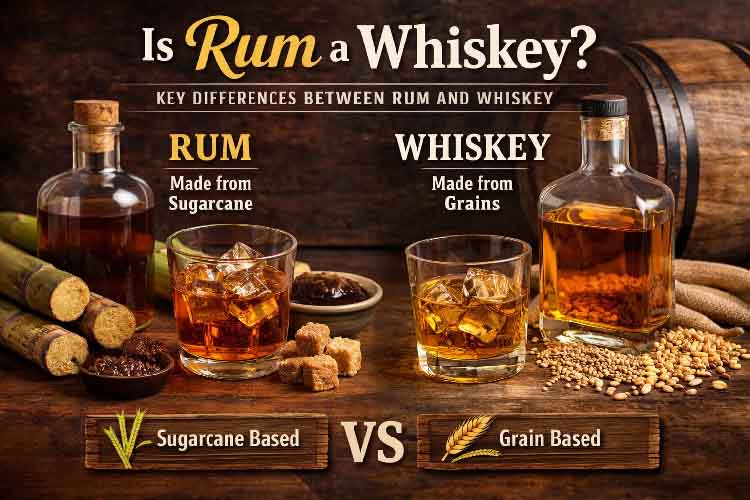
Infographic comparing rum and whiskey showing rum made from sugarcane and whiskey made from grains, with bottles, glasses on the rocks, sugarcane stalks and grain, highlighting key differences between rum and whiskey.

Short answer: No, rum is not a whiskey.

Long answer: While they share some similarities in how they’re made and enjoyed, rum and whiskey are fundamentally different spirits with distinct ingredients, histories, and legal definitions.

The biggest difference comes down to what they’re made from.

The Core Ingredient

Whiskey is distilled from grain. Depending on the style, that grain might be corn (bourbon), barley (scotch), rye (rye whiskey), wheat, or a combination known as a mash bill. Grains contain starch, not sugar, so they must go through a cooking process to convert starches into fermentable sugars before fermentation can begin.

Rum, on the other hand, is distilled from sugarcane products. This usually means molasses (a byproduct of sugar production), but it can also mean fresh sugarcane juice or sugarcane syrup. Unlike grains, sugarcane already contains fermentable sugar, so it skips the starch-conversion step entirely.

If it comes from grain, it can be whiskey.
If it comes from sugarcane, it’s rum.

That distinction alone keeps rum firmly outside the whiskey category.

Legal Definitions Matter

Spirit classifications aren’t just tradition — they’re regulated by law.

In the United States, whiskey must be distilled from a fermented mash of grain. Bourbon, for example, must contain at least 51% corn and be aged in new charred oak barrels. Scotch must be made primarily from malted barley and aged for at least three years in oak casks in Scotland.

Rum, legally, must be distilled from sugarcane byproducts and bottled at a minimum alcohol level (typically 40% ABV in most markets). No grain allowed.

Because rum doesn’t meet the grain requirement, it cannot legally be classified as whiskey.

Why the Confusion?

Part of the confusion comes from appearance and aging. Many rums are aged in oak barrels — often used bourbon barrels — which can give them a golden or dark brown color similar to whiskey. Aging also adds flavors like vanilla, caramel, and spice, which are commonly associated with whiskey.

An aged rum can sometimes taste surprisingly similar to a bourbon. But similarity in flavor doesn’t equal sameness in identity.

Think of it like two musicians playing the same song on different instruments. The tune may feel familiar, but the source is different.

Flavor Profiles

Whiskey tends to showcase flavors derived from grain and oak: toasted cereal, vanilla, caramel, spice, smoke (in peated scotch), and sometimes dried fruit.

Rum leans toward sugar-driven flavors: molasses, brown sugar, tropical fruit, banana, toffee, and sometimes a funky, fermented character (especially in Jamaican styles). Rhum agricole, made from fresh cane juice, can even have grassy or herbal notes.

The base ingredient shapes everything that follows.

Different Histories

Whiskey developed in grain-growing regions like Scotland, Ireland, and later the United States. Rum was born in the Caribbean in the 1600s, closely tied to sugar plantations and maritime trade.

They evolved in different climates, cultures, and economic systems. Their identities are rooted in different agricultural traditions.

The Bottom Line

Rum is not a whiskey.

Whiskey is a grain-based spirit.
Rum is a sugarcane-based spirit.

They may share barrels, color, and similar alcohol strength, but they come from entirely different raw materials and traditions.

Rather than asking whether rum is a whiskey, the better question might be: which one fits your mood tonight? Both have depth, character, and centuries of craftsmanship behind them — just in very different ways.

What Makes Tennessee Whiskey Unique? The Charcoal-Mellowed Difference

02/20/2026
by TOB Admin

Tennessee whiskey is often mentioned in the same breath as bourbon, and for good reason. At a glance, the two spirits share many similarities in ingredients, production standards, and flavor profiles. However, Tennessee whiskey has one defining characteristic that sets it apart and gives it a distinct identity in the world of American whiskey: the Lincoln County Process.

Like bourbon, Tennessee whiskey must follow strict legal standards. It must be made in the United States, contain at least 51% corn in its mash bill, be distilled to no more than 160 proof, entered into new charred oak barrels at no more than 125 proof, and bottled at a minimum of 80 proof. These requirements create a rich, slightly sweet foundation dominated by corn, with supporting grains like rye or malted barley adding spice and structure.

So if the rules are nearly identical, what makes Tennessee whiskey different?


The answer lies in charcoal mellowing. Before the spirit is aged in barrels, Tennessee whiskey undergoes the Lincoln County Process, a unique filtration step in which the freshly distilled spirit is slowly filtered through layers of sugar maple charcoal. This process can take several days and requires careful monitoring. The charcoal acts as a natural purifier, removing impurities and softening harsh elements in the raw spirit.

The result is a smoother, rounder whiskey before it even touches the barrel. While bourbon develops smoothness primarily during aging, Tennessee whiskey begins that refinement earlier. Many enthusiasts describe Tennessee whiskey as slightly softer, more mellow, and subtly sweeter compared to traditional bourbons with similar mash bills.

Geography also plays an important role. Tennessee’s climate features warm summers and cool winters, creating ideal aging conditions. As temperatures rise, the whiskey expands into the charred oak staves of the barrel, extracting caramelized sugars, vanillin, and toasted wood compounds. When temperatures drop, the spirit contracts, pulling those flavors back into the liquid. This seasonal cycle accelerates flavor development and contributes to Tennessee whiskey’s balanced complexity.

The barrels themselves are another essential component. Like bourbon, Tennessee whiskey must be aged in new charred oak barrels. The heavy char layer inside the barrel caramelizes natural wood sugars and creates a charcoal barrier that filters the spirit during maturation. This adds notes of vanilla, caramel, toasted oak, baking spice, and light smokiness.

Legally, to be labeled Tennessee whiskey, the spirit must be produced in the state of Tennessee and follow state-specific guidelines, including charcoal filtration (with limited exceptions). This geographical designation reinforces its authenticity and protects its heritage.

Flavor-wise, Tennessee whiskey is often described as smooth and approachable. Expect notes of caramel, vanilla, toasted oak, subtle maple sweetness, and gentle spice. The charcoal mellowing can also introduce faint hints of light smoke and soft fruit undertones.

In essence, Tennessee whiskey is not simply bourbon made in Tennessee. It is bourbon refined by tradition. The Lincoln County Process, combined with regional climate and craftsmanship, gives Tennessee whiskey its signature character — smooth, balanced, and distinctly its own.

Lincoln County Process Explained: History, Innovation, and the Enslaved Distillers Who Shaped Tennessee Whiskey

02/20/2026
by TOB Admin
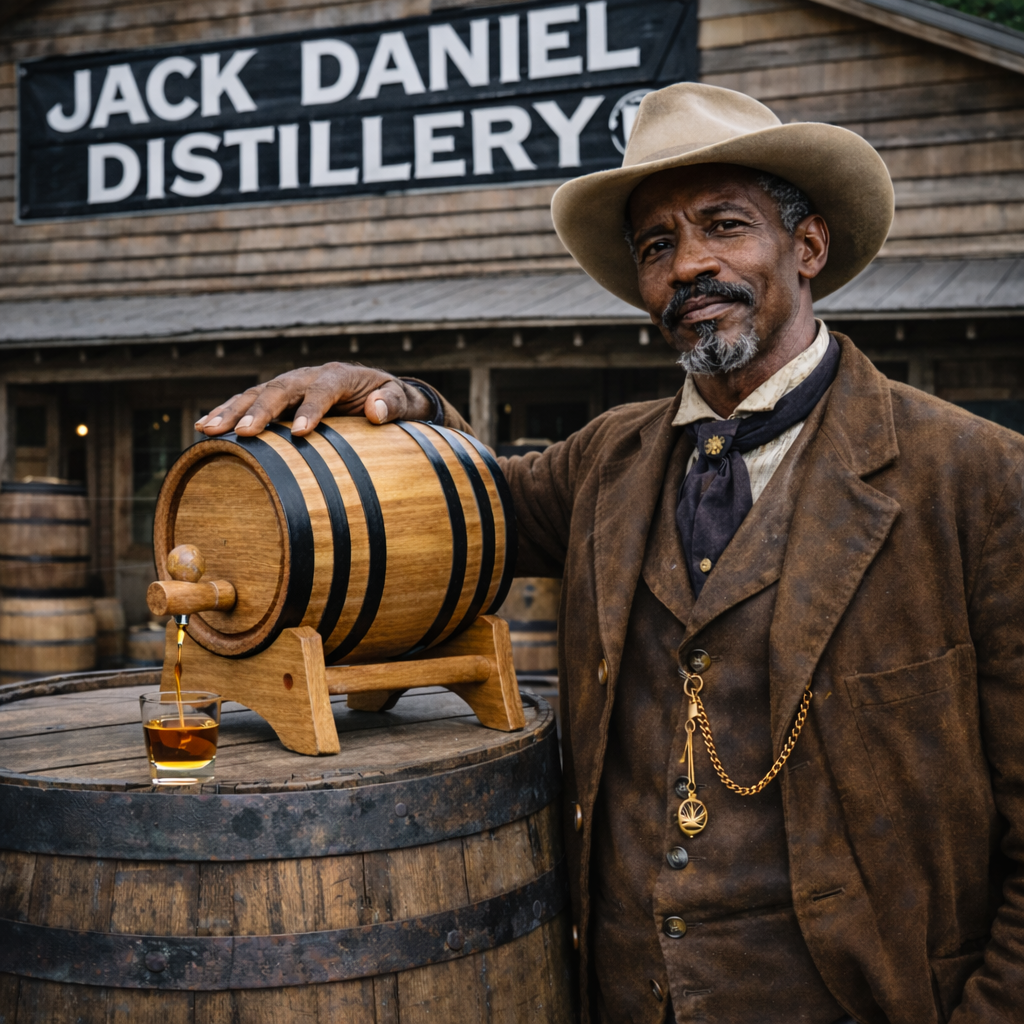
Portrait of Nathan “Uncle Nearest” Green standing in front of the historic Jack Daniel Distillery building with wooden barrels, dressed in 19th-century attire including a brown coat and wide-brim hat.

When people search for “Lincoln County Process explained,” they usually want to understand what makes Tennessee whiskey different from bourbon.

The short answer: charcoal mellowing.

But the full story is deeper — and more important.

The Lincoln County Process is not just a technical filtration method. It is part of a complex American history that includes innovation, frontier distilling traditions, and the largely uncredited labor and expertise of enslaved African American distillers who helped shape early American whiskey production.

To truly explain the Lincoln County Process, we must talk about both the science and the people behind it.

What Is the Lincoln County Process?

The Lincoln County Process is a charcoal mellowing method used in the production of Tennessee whiskey. Before aging in new charred oak barrels, newly distilled spirit is filtered through sugar maple charcoal.

This step:

  • Removes certain impurities

  • Softens harsh alcohol notes

  • Contributes to Tennessee whiskey’s smooth texture

  • Creates subtle flavor refinement

Under Tennessee law, charcoal mellowing is required for a whiskey to be labeled “Tennessee Whiskey.”

Unlike bourbon, which goes straight into the barrel after distillation, Tennessee whiskey undergoes this extra step before aging.

The Historical Origins of the Lincoln County Process

The process is believed to have originated in early 19th-century Tennessee — specifically Lincoln County — hence the name.

Frontier distillers needed ways to refine raw spirits. Charcoal filtration was already known in various forms around the world. However, its systematic application in Tennessee whiskey production became a defining regional practice.

But here’s where the story becomes more nuanced.

Early Southern distilleries relied heavily on enslaved labor. Enslaved African Americans were not simply manual workers — many were highly skilled distillers, coopers (barrel makers), charcoal producers, and fermentation specialists.

Recent scholarship and documented oral histories have made it clear that enslaved distillers played a significant role in developing and refining early American whiskey production techniques — including charcoal mellowing methods.

The Role of Enslaved Distillers in Early Tennessee Whiskey

One of the most well-documented examples is Nathan “Nearest” Green, an enslaved African American distiller in Tennessee during the mid-1800s.

Green was recognized as an expert in whiskey distillation and charcoal filtration. Historical accounts and modern research indicate that he taught techniques to other distillers in Tennessee, including those who would later become famous whiskey producers.

While the exact origin of the Lincoln County Process cannot be credited to a single individual, it is widely acknowledged that enslaved distillers were central to refining the charcoal mellowing technique.

Their contributions included:

  • Controlling fermentation temperatures

  • Managing copper still operation

  • Producing consistent sugar maple charcoal

  • Overseeing charcoal filtration methods

  • Monitoring barrel aging

For decades, their expertise went uncredited in mainstream whiskey history. Today, historians and distilleries are increasingly recognizing this legacy.

Understanding the Lincoln County Process requires acknowledging that it emerged from a system that relied on enslaved labor and Black craftsmanship.

How the Lincoln County Process Works

Now let’s examine the technical process itself.

Step 1: Distillation

Like bourbon, Tennessee whiskey begins with a mash bill containing at least 51% corn. Rye and malted barley are typically included for spice and enzyme conversion.

The mash is fermented and distilled into new make spirit.

Step 2: Sugar Maple Charcoal Production

Sugar maple wood is burned to create charcoal. This charcoal is then crushed or stacked into filtration vats.

The use of sugar maple is traditional to Tennessee and produces a consistent carbon structure suitable for filtration.

Step 3: Charcoal Mellowing

The new make spirit is slowly filtered through several feet of sugar maple charcoal.

This slow drip can take days.

As the spirit moves through the charcoal, certain compounds bind to the carbon surface. This process is called adsorption (not absorption).

It reduces harsh fusel oils and sulfur compounds while preserving flavor character.

Step 4: Barrel Aging

After filtration, the whiskey enters new charred American oak barrels.

Aging contributes:

  • Caramel

  • Vanilla

  • Toasted oak

  • Color

  • Structure

  • Spice

The charcoal step softens the spirit before the barrel deepens it.

What Charcoal Mellowing Actually Changes

The Lincoln County Process does not dramatically alter flavor like peat smoke in Scotch whisky. Instead, it affects texture and refinement.

It creates:

  • Smoother mouthfeel

  • Reduced alcohol burn

  • Balanced sweetness

  • Gentle maple undertones

  • Subtle charcoal nuance

Many describe Tennessee whiskey as “rounder” and “softer” compared to some bourbons.

Lincoln County Process vs Bourbon: Key Differences

Many ask whether Tennessee whiskey is just bourbon made in Tennessee.

Legally and technically, Tennessee whiskey meets all federal bourbon requirements:

  • At least 51% corn

  • Distilled below 160 proof

  • Aged in new charred oak barrels

  • Made in the United States

However, Tennessee whiskey must also undergo charcoal mellowing.

That additional step defines its regional identity.

Why the History Matters

For generations, the narrative of American whiskey centered almost exclusively on white distillers and brand founders.

Modern historical research has corrected that incomplete story.

Enslaved African Americans were not merely laborers — they were master distillers whose knowledge shaped production methods.

Acknowledging their role is not about rewriting history. It’s about completing it.

The Lincoln County Process evolved within a system that depended on enslaved expertise.

Understanding that reality adds depth to the story of Tennessee whiskey.

The Science Behind Charcoal Filtration

Charcoal filtration works through surface chemistry.

Activated carbon contains millions of microscopic pores. These pores trap specific organic compounds as liquid passes through.

In whiskey production, charcoal mellowing:

  • Reduces certain volatile compounds

  • Minimizes sulfur notes

  • Softens perceived sharpness

  • Enhances perceived smoothness

The slower the filtration, the more contact time the spirit has with the charcoal.

Early distillers — including enslaved craftsmen — learned to control this rate carefully.

Can You Replicate the Lincoln County Process at Home?

While commercial-scale sugar maple vats aren’t practical for most people, enthusiasts can experiment with charcoal filtration before barrel aging.

When using an oak barrel aging kit, some hobbyists:

  1. Filter neutral spirits through food-grade charcoal.

  2. Allow the spirit to rest.

  3. Transfer to a charred oak barrel.

  4. Monitor flavor weekly.

The key is moderation — too much filtration can strip character.

Like early distillers discovered, balance is everything.

Why the Barrel Still Defines the Final Flavor

Charcoal mellowing creates smoothness.

The barrel creates complexity.

Charred American oak contributes:

  • Vanillin

  • Caramelized sugars

  • Oak tannins

  • Spice

  • Color

The Lincoln County Process prepares the spirit for barrel aging — it does not replace it.

Together, the charcoal and the barrel create Tennessee whiskey’s signature character.

Frequently Asked Questions

Who invented the Lincoln County Process?

There is no single documented inventor. However, enslaved African American distillers played a major role in developing and refining charcoal mellowing methods in Tennessee.

Is Tennessee whiskey sweeter than bourbon?

Not necessarily sweeter — but often perceived as smoother due to charcoal mellowing.

Does charcoal mellowing remove flavor?

It reduces harsh compounds while preserving core grain character.

Final Thoughts: Lincoln County Process Explained Fully

The Lincoln County Process is both a technical filtration method and a cultural artifact.

It represents:

  • Early American frontier distilling

  • Sugar maple charcoal craftsmanship

  • The innovation of enslaved African American distillers

  • The evolution of regional whiskey identity

By filtering new make spirit through sugar maple charcoal before aging, Tennessee whiskey gains its hallmark smoothness.

But the process also carries a human story — one that includes the labor, skill, and knowledge of enslaved craftsmen whose contributions are now receiving long-overdue recognition.

When we explain the Lincoln County Process, we must explain all of it:

The science.
The flavor.
And the people.

Only then do we truly understand what makes Tennessee whiskey unique.

What is Kentucky Bourbon? And how to Recreate Authentic Bourbon Flavor at Home

02/20/2026
by TOB Admin
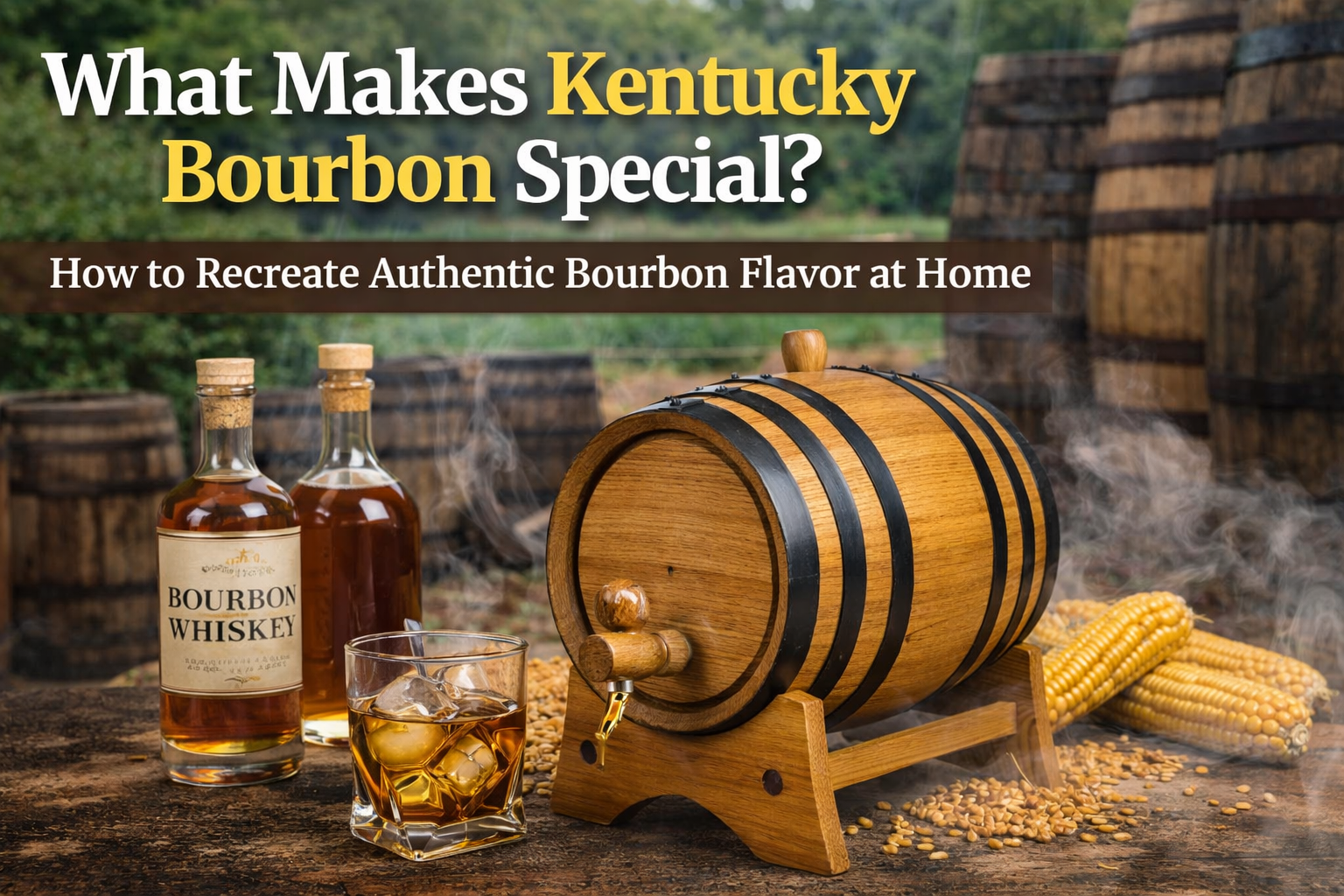
Charred American oak mini aging barrel with bourbon whiskey glass, corn mash, and Kentucky bourbon bottles illustrating authentic barrel aging process and flavor development.

Kentucky Bourbon isn’t just another whiskey — it’s America’s native spirit, protected by law, rooted in tradition, and defined by craftsmanship. From the limestone-rich water of Kentucky to the unmistakable sweetness of charred American oak, bourbon carries a flavor profile and heritage unlike any other spirit in the world.

But what truly makes Kentucky bourbon special? And is it really possible to recreate that classic caramel-vanilla character at home?

Let’s break it down.

Bourbon Is Defined by Law — and Tradition

Unlike many spirits, bourbon is tightly regulated. To legally be called bourbon, it must:

  • Be made in the United States

  • Contain at least 51% corn in the mash bill

  • Be distilled to no more than 160 proof

  • Enter the barrel at no more than 125 proof

  • Be aged in new, charred American white oak barrels

  • Contain no additives, coloring, or artificial flavoring

Kentucky produces about 95% of the world’s bourbon, and while bourbon can technically be made anywhere in the U.S., Kentucky’s climate, water, and history give its bourbon a distinct edge.

The Corn-Forward Mash Bill

The high corn content is what gives bourbon its signature sweetness. Corn creates soft, round flavors with notes of caramel, honey, and light toffee. Most Kentucky bourbons balance that sweetness with rye (for spice) or wheat (for softness), along with malted barley to support fermentation.

That sweet foundation is what separates bourbon from rye whiskey, Scotch whisky, or Irish whiskey. It’s richer, warmer, and more dessert-like in character.

Limestone Water: Kentucky’s Natural Advantage

Kentucky’s limestone-filtered water removes iron while adding calcium and magnesium — minerals that support healthy fermentation. Iron can negatively affect flavor, so this natural filtration contributes to the smoothness bourbon is known for.

While water is important, the real transformation happens next.

The Barrel Is Where the Magic Happens

The most defining characteristic of Kentucky bourbon is its aging process in new, charred American oak barrels.

Before bourbon enters the barrel, it’s clear — often called “white dog.” The deep amber color, vanilla aroma, caramel sweetness, and warm spice all come from the interaction between spirit and wood.

Here’s what happens inside the barrel:

  • Charred oak caramelizes wood sugars, creating caramel and toffee notes

  • Lignin breaks down into vanillin, producing classic vanilla flavors

  • Tannins add structure and subtle spice

  • Seasonal temperature swings push the spirit into and out of the wood, intensifying extraction

Kentucky’s hot summers and cold winters accelerate this interaction, giving bourbon bold character and complexity.

Without the barrel, it’s not bourbon.

Flavor Profile of Kentucky Bourbon

A classic Kentucky bourbon typically delivers:

  • Rich caramel sweetness

  • Smooth vanilla bean notes

  • Toasted oak depth

  • Baking spice warmth

  • Hints of dark fruit

  • A lingering, smooth finish

This balance of sweetness and oak spice is what bourbon lovers crave — and what makes it different from smoky Scotch or sharper rye whiskey.

Can You Recreate Kentucky Bourbon Flavor at Home?

While traditional distilleries age bourbon for years in large rickhouses, you can recreate the core flavor development process at home — because the most important element is the charred oak barrel.

That’s where our Kentucky Bourbon Whiskey Making Kit comes in.

Instead of focusing on commercial-scale distillation, our kit allows you to replicate the most flavor-defining stage of bourbon production: barrel aging.

The new wood mini aging barrel from Thousand Oaks Barrel Co. stands apart because it is crafted from fresh, charred American white oak—exactly what federal law requires for authentic bourbon production. Unlike used barrels, decorative casks, or infusion alternatives like chips and spirals, this barrel delivers a true first-fill experience. The interior char layer caramelizes natural oak sugars while breaking down lignin into vanillin, producing the rich caramel, vanilla, toasted oak, and baking spice notes that define real Kentucky bourbon. 

Built with proper stave thickness and traditional coopering methods, it also allows natural micro-oxygenation through the wood—an essential part of bourbon maturation that artificial systems cannot replicate. Because it is new oak and properly charred, the Thousand Oaks Barrel Co. mini barrel mirrors the same chemistry that occurs in full-size rickhouse barrels, just on an accelerated scale. The result isn’t simply flavored whiskey—it’s authentic barrel-driven transformation that recreates genuine bourbon character.

How Our Kentucky Bourbon Whiskey Making Kit Works

Our kit includes:

  • A premium new wood American oak barrel with a charred interior

  • Kentucky Bourbon essence packets

  • Barrel restoration and cleaning kit

  • Bung and spigot

  • Cradle stand

  • Funnels and storing tablets

  • Step-by-step aging guide

You simply add a neutral grain spirit and the included bourbon essence, then allow the charred oak barrel to work its magic.

Because smaller barrels have a higher surface-area-to-liquid ratio, flavor extraction happens faster than in large commercial barrels. In weeks instead of years, you’ll see:

  • Natural amber color development

  • Caramelized wood sugar sweetness

  • Vanilla extraction from oak

  • Subtle spice from tannins

  • Increased smoothness over time

You’re not just flavoring alcohol — you’re allowing real oak chemistry to transform it.

Why This Matters for Bourbon Lovers

Bourbon is about craftsmanship, patience, and appreciation of process. With a Kentucky Bourbon Whiskey Making Kit, you become part of that tradition.

You control:

  • Aging time

  • Flavor intensity

  • Batch size

  • Custom variations

Want deeper oak? Age longer. Prefer smoother and sweeter? Bottle earlier. You can even experiment with additional aging techniques once you master the basics.

It’s an immersive experience that deepens your appreciation for America’s native spirit.

Bringing Kentucky Home

Kentucky bourbon is special because of its legal standards, corn-forward sweetness, limestone water, and especially its charred oak barrel aging process. That combination creates one of the most recognizable flavor profiles in the world.

While nothing replaces visiting a Kentucky rickhouse, you can recreate the heart of bourbon’s flavor development at home.

With our Kentucky Bourbon Whiskey Making Kit, you don’t just drink bourbon — you craft it. You watch it mature. You taste it evolve.

And in doing so, you gain a deeper respect for what makes Kentucky bourbon truly special. 

Whiskey vs. Brandy: What’s the Real Difference?

02/20/2026
by TOB Admin
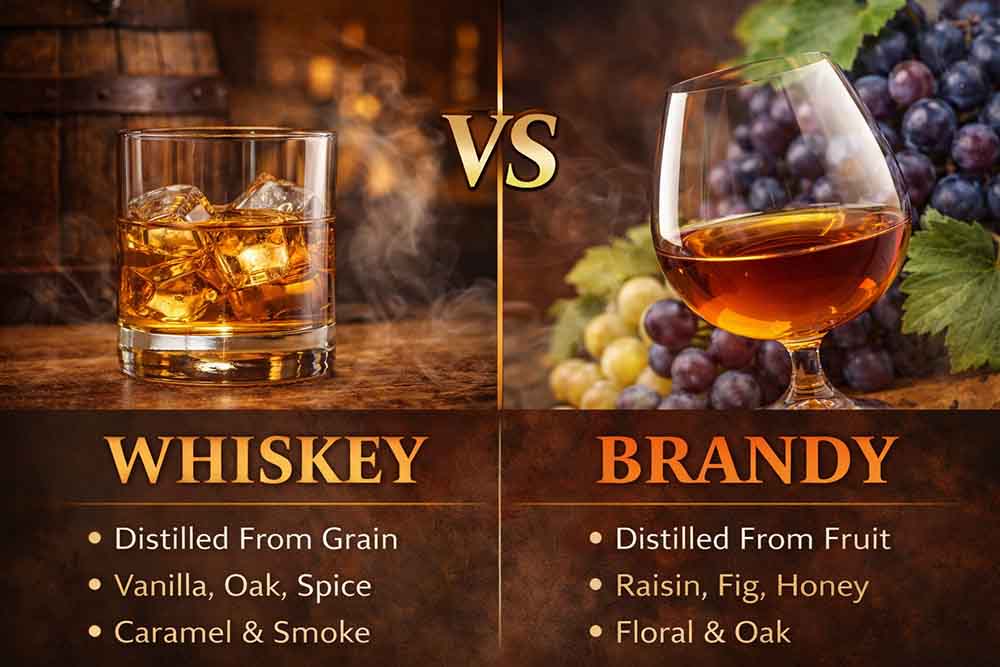
Side-by-side comparison image of whiskey and brandy showing grain-based whiskey with oak barrel and fruit-based brandy with grapes, highlighting differences in ingredients, flavor profiles, and aging.

Whiskey and brandy are both aged spirits enjoyed neat, on the rocks, or in classic cocktails—but they are fundamentally different in how they’re made, what they’re made from, and how they taste. Understanding these differences can help you choose the right spirit for your palate, your bar, and your next pour.

The Core Difference: Grain vs. Fruit

The most important distinction between whiskey and brandy is their base ingredient.

Whiskey is distilled from fermented grain mash. Depending on the style, that grain can include corn, barley, rye, or wheat. Bourbon, for example, must contain at least 51% corn. Rye whiskey contains at least 51% rye. Scotch is typically made from malted barley.

Brandy, on the other hand, is distilled from fermented fruit juice—most commonly grapes. In fact, brandy is essentially distilled wine. Some brandies are made from apples (like Calvados) or other fruits, but grape-based brandy is the most common style worldwide.

In short:

  • Whiskey = distilled grain

  • Brandy = distilled fruit

The Production Process

Both spirits begin with fermentation, but the source material changes everything.

Whiskey Production

  1. Grains are mashed and fermented into a beer-like liquid.

  2. The liquid is distilled to concentrate alcohol.

  3. It is aged in wooden barrels—often charred oak.

  4. Over time, the spirit develops color, flavor, and smoothness from the wood.

Many American whiskeys, like bourbon and Tennessee whiskey, use new charred oak barrels, which give bold flavors of vanilla, caramel, and toasted oak.

Brandy Production

  1. Fruit juice (usually grape wine) is fermented.

  2. The wine is distilled.

  3. It is aged in oak barrels (often previously used barrels).

  4. The spirit develops rich fruit and oak complexity.

Brandy barrels are usually not heavily charred like bourbon barrels, resulting in a smoother, fruit-forward profile.

Flavor Profile Differences

Because whiskey is grain-based and often aged in charred oak, it typically offers flavors like:

  • Caramel

  • Vanilla

  • Toffee

  • Oak

  • Spice

  • Smoke (especially in Scotch)

  • Toasted grain

Brandy, being fruit-based, tends to deliver:

  • Dried fruit

  • Raisin

  • Fig

  • Honey

  • Floral notes

  • Subtle oak

  • Warm spice

Whiskey often has a bolder, more structured mouthfeel, while brandy is typically softer, rounder, and more fruit-forward.

Aging & Color

Both spirits get their amber color primarily from barrel aging. The longer they age in oak, the darker and more complex they become.

Whiskey aging regulations vary by country. Bourbon must be aged in new charred oak barrels. Scotch must age at least three years. Some whiskeys age for decades.

Brandy aging classifications (like VS, VSOP, and XO in Cognac) indicate minimum barrel aging periods, often ranging from two years to much longer.

Cultural Origins

Whiskey has strong roots in Ireland, Scotland, the United States, Canada, and Japan. It evolved from grain distillation traditions dating back centuries.

Brandy originated in Europe, particularly France and Spain, where distilling wine became a way to preserve and transport it more efficiently.

How They’re Enjoyed

Whiskey is commonly served neat, on the rocks, or in cocktails like the Old Fashioned and Manhattan.

Brandy is often sipped neat in a snifter, slightly warmed by hand, or used in cocktails like the Sidecar or Brandy Alexander.

Final Thoughts

Whiskey and brandy may look similar in the glass, but their differences start at the source: grain versus fruit. Whiskey tends to be bold, spicy, and oak-driven. Brandy is smooth, rich, and fruit-forward.

Both offer complex, rewarding drinking experiences—just built on entirely different foundations.

Unleash Your Inner Alchemist: Crafting Your Own Bourbon at Home

02/19/2026
by Jay Hubbard

Imagine the rich, complex aroma of aged bourbon permeating your kitchen as you transform a simple spirit into something extraordinary. While true barrel-aged bourbon takes years, you can capture the essence of this beloved American whiskey right in your own home with a bourbon making kit. It's a fantastic way to experiment, customize, and truly understand the flavor profiles that make bourbon so captivating.

The Magic of Bourbon Extract

Crafting bourbon isn't about distillation, but rather about infusion and transformation. Kits like those found on https://whiskeymakingkits.com/provide everything you need to infuse a neutral spirit with the characteristic flavors of bourbon. This often involves:

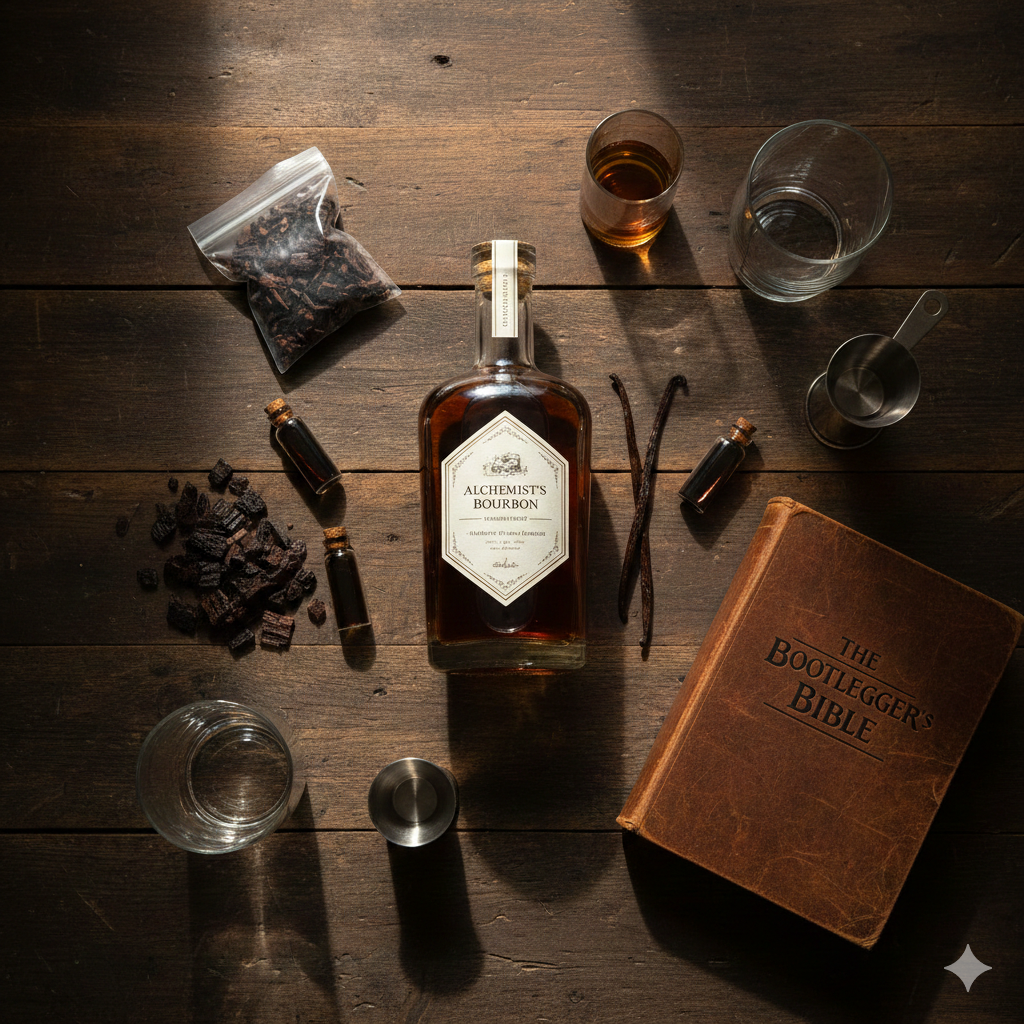
  • Premium Essence: These specially formulated extracts capture the sweet, smoky, and often vanilla notes inherent in a good bourbon. They are designed to replicate the complex flavors developed during traditional aging.
  • Flavoring Botanicals/Wood Chips: Some kits may include wood chips (often charred oak) or real charred oak barrels that contribute to the color, aroma, and mouthfeel of premium bourbon.
  • The Bootlegger's Bible: An invaluable guide with step-by-step instructions, recipes, and tips to help you navigate the process like a seasoned pro.

Why Go DIY?

  1. Customization: Want a spicier bourbon? A sweeter one? With essence extracts, you have control. You can adjust the amount of essence or even add your own complementary flavors like dried fruit or different wood types.
  2. Speed: Forget waiting years. With a Bootleg Kit from Thousand Oaks Barrel Co., you can enjoy a beautifully flavored bourbon in a matter of days or weeks, depending on the desired intensity.
  3. Educational: It's a hands-on lesson in flavor chemistry and the art of blending. You'll gain a deeper appreciation for the nuances of bourbon.
  4. Cost-Effective: Producing your own custom spirits can be more economical than continuously buying premium bottles.
  5. Unique Gift: A homemade bottle of extract bourbon or even the kit itself makes an incredibly thoughtful and unique gift for any whiskey lover.

Your Journey to Crafting Excellence

Starting your bourbon journey is simple. You'll typically begin with a high-proof neutral grain spirit (like vodka). Then, following the kit's instructions, you'll add the essence and any other infusing elements. Time and a bit of patience will do the rest, allowing the flavors to meld and deepen.

Ready to unleash your inner alchemist and craft your signature sip? Explore the possibilities and start your extract bourbon adventure today!