
Is Rum a Whiskey? Key Differences Between Rum and Whiskey Explained
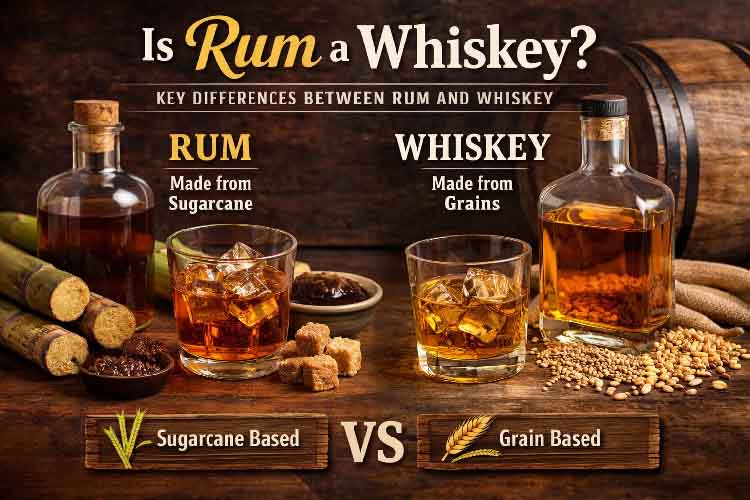
Short answer: No, rum is not a whiskey.
Long answer: While they share some similarities in how they’re made and enjoyed, rum and whiskey are fundamentally different spirits with distinct ingredients, histories, and legal definitions.
The biggest difference comes down to what they’re made from.
The Core Ingredient
Whiskey is distilled from grain. Depending on the style, that grain might be corn (bourbon), barley (scotch), rye (rye whiskey), wheat, or a combination known as a mash bill. Grains contain starch, not sugar, so they must go through a cooking process to convert starches into fermentable sugars before fermentation can begin.
Rum, on the other hand, is distilled from sugarcane products. This usually means molasses (a byproduct of sugar production), but it can also mean fresh sugarcane juice or sugarcane syrup. Unlike grains, sugarcane already contains fermentable sugar, so it skips the starch-conversion step entirely.
If it comes from grain, it can be whiskey.
If it comes from sugarcane, it’s rum.
That distinction alone keeps rum firmly outside the whiskey category.
Legal Definitions Matter
Spirit classifications aren’t just tradition — they’re regulated by law.
In the United States, whiskey must be distilled from a fermented mash of grain. Bourbon, for example, must contain at least 51% corn and be aged in new charred oak barrels. Scotch must be made primarily from malted barley and aged for at least three years in oak casks in Scotland.
Rum, legally, must be distilled from sugarcane byproducts and bottled at a minimum alcohol level (typically 40% ABV in most markets). No grain allowed.
Because rum doesn’t meet the grain requirement, it cannot legally be classified as whiskey.
Why the Confusion?
Part of the confusion comes from appearance and aging. Many rums are aged in oak barrels — often used bourbon barrels — which can give them a golden or dark brown color similar to whiskey. Aging also adds flavors like vanilla, caramel, and spice, which are commonly associated with whiskey.
An aged rum can sometimes taste surprisingly similar to a bourbon. But similarity in flavor doesn’t equal sameness in identity.
Think of it like two musicians playing the same song on different instruments. The tune may feel familiar, but the source is different.
Flavor Profiles
Whiskey tends to showcase flavors derived from grain and oak: toasted cereal, vanilla, caramel, spice, smoke (in peated scotch), and sometimes dried fruit.
Rum leans toward sugar-driven flavors: molasses, brown sugar, tropical fruit, banana, toffee, and sometimes a funky, fermented character (especially in Jamaican styles). Rhum agricole, made from fresh cane juice, can even have grassy or herbal notes.
The base ingredient shapes everything that follows.
Different Histories
Whiskey developed in grain-growing regions like Scotland, Ireland, and later the United States. Rum was born in the Caribbean in the 1600s, closely tied to sugar plantations and maritime trade.
They evolved in different climates, cultures, and economic systems. Their identities are rooted in different agricultural traditions.
The Bottom Line
Rum is not a whiskey.
Whiskey is a grain-based spirit.
Rum is a sugarcane-based spirit.
They may share barrels, color, and similar alcohol strength, but they come from entirely different raw materials and traditions.
Rather than asking whether rum is a whiskey, the better question might be: which one fits your mood tonight? Both have depth, character, and centuries of craftsmanship behind them — just in very different ways.

Whiskey Blog
- What Is Whiskey? A Complete Guide to the World’s Most Iconic Spirit
- Top 10 DIY Kits for Crafting Whiskey at Home
- Is Rum a Whiskey? Key Differences Between Rum and Whiskey Explained
- What Makes Tennessee Whiskey Unique? The Charcoal-Mellowed Difference
- Lincoln County Process Explained: History, Innovation, and the Enslaved Distillers Who Shaped Tennessee Whiskey